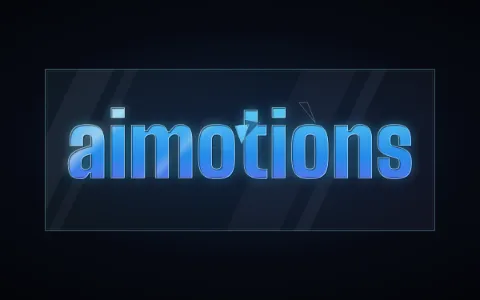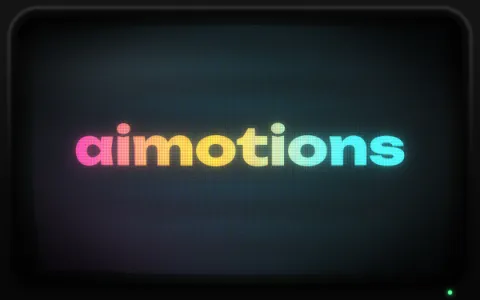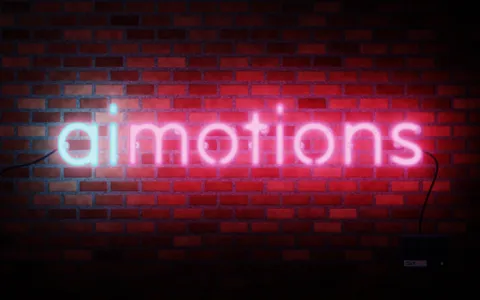
Neon Sign Warm-Up
neon text · neon sign effect · glowing tube lettering · neon flicker
Guide · animation prompts
Today’s best AI models write surprisingly good animation code, but only if you can describe what you want. “Something modern and eye-catching” gets you something generic; a prompt that names the composition, typography, palette, motion and timing gets you exactly the look you had in mind.
This guide sums up what we learned writing the 195 prompts on aimotions: the ingredients every animation prompt needs, a template to fill in, and the most common mistakes.
Which word or phrase is animated. Use a placeholder like [TEXT] so the prompt is reusable, and ask for it to be fully legible at rest.
Where the word sits, how big, and what surrounds it: centered full-bleed, small in a corner, inside a frame, over a horizon…
Describe the classification rather than a font name: “heavy condensed grotesque”, “rounded display”, “blackletter”, “monospace”. Add weight, case and spacing.
The background and two to four named colors (hex codes optional). The palette defines a style as much as the motion does.
Film grain, paper, bleeding ink, chrome, glass, neon, pixels… This is what turns a correct animation into one with character.
How the word enters, what happens while it holds, and how it exits or restarts. Think in concrete beats, not adjectives.
Durations in seconds and the kind of acceleration: snappy, elastic with overshoot, slow drift, stepped and mechanical. Say whether it should loop seamlessly.
What you want back (a self-contained HTML file, a component, a shader, a brief) and the rules: aspect ratio, legibility, no flashing, a reduced-motion version.
Animate the word "[TEXT]" in a [style name] style.
Look: [composition: where the word sits, how big, what frames it]. [Typography: classification, weight, case, spacing]. [Palette: background plus 2–4 named colors]. [Texture or material: grain, glow, paper, chrome…].
Motion: [sequence: how the word enters, what happens while it holds, how it exits]. [Timing: total length and the main beats, in seconds]. [Easing: snappy, elastic, slow drift…]. Loop seamlessly.
Rules: [TEXT] must be fully legible at rest; nothing flashes more than three times per second; provide a still, legible version for reduced motion.
Output: [one self-contained HTML file / a component for my framework / a shader / a brief for a motion designer], 16:10 frame.
Here is one of the prompts in the library. Notice how it describes the look and the motion without mentioning any tool:
neon text · neon sign effect · glowing tube lettering · neon flicker
“Modern”, “cool” or “premium” describe nothing. Replace them with what is visible: colors, materials, sizes and timings.
Asking for “an animation with library X” constrains the model without describing the style. Describe the result and leave the technique for the end, as the output format.
Asking for the style of a specific brand, film or person can reproduce protected identities. Describe the visual genre instead: “eighties sci-fi title sequence” rather than a specific title.
Without durations the model improvises, and it is almost always too fast. Give seconds and key beats.
One strong style beats five mixed effects. If you want variations, ask in a second round.
A text animation nobody can read is useless. Always ask for the text to be fully legible at rest.
Ask for a single HTML file first so you can see the result instantly. Once you like it, ask for the component for your project.
“30% slower entrance with a soft ease-out”, “more grain”, “sweep the glint left to right across the word”. The more concrete, the better the next version.
Ask the model to check the loop, that nothing flashes more than three times per second, and that the text reads on a phone.
Every style in the library comes with a complete prompt. Hover over a preview to see it move (on touch screens it plays by itself), and copy the one closest to what you need.
shatter on hover · broken glass text · glass break effect · cracked glass cursor
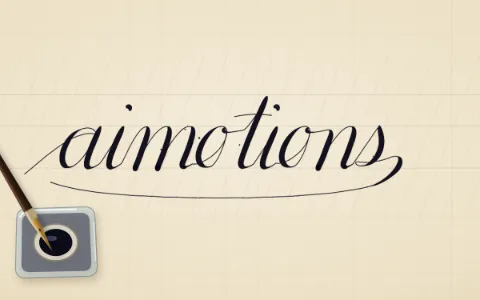
pointed pen calligraphy · copperplate script · engrosser script · calligraphy writing animation
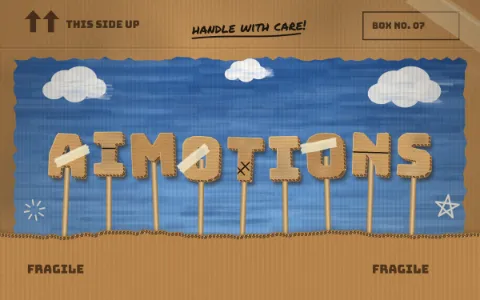
cardboard letters · corrugated cardboard text · cardboard cutout animation · diy cardboard type
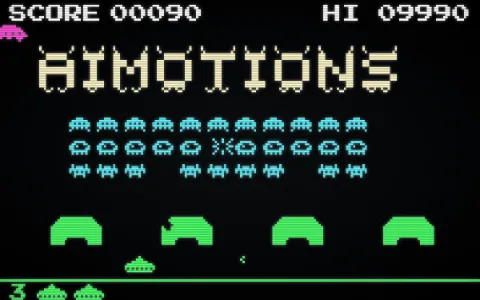
fixed shooter arcade · alien invasion arcade · pixel aliens marching · retro shoot em up
crt tv turn on · tv power off effect · old tv switch on · crt scanlines
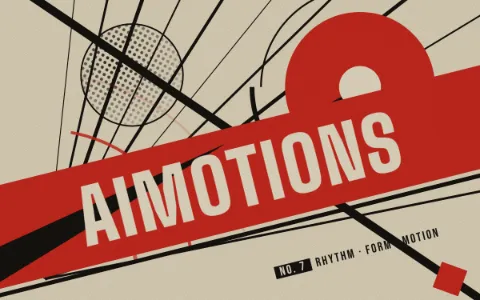
constructivism · russian avant-garde poster · diagonal poster design · red black poster
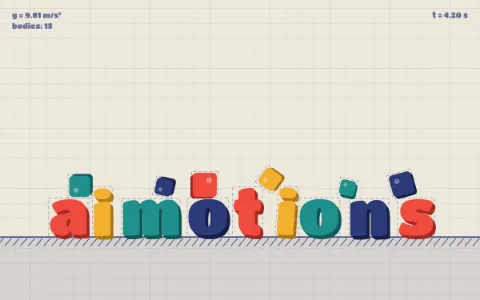
falling letters · physics text animation · rigid body typography · letters drop and collide
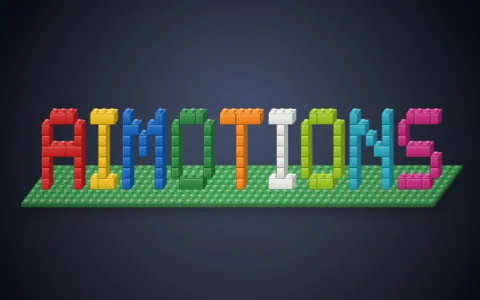
toy brick letters · building blocks text · brick build animation · stud bricks
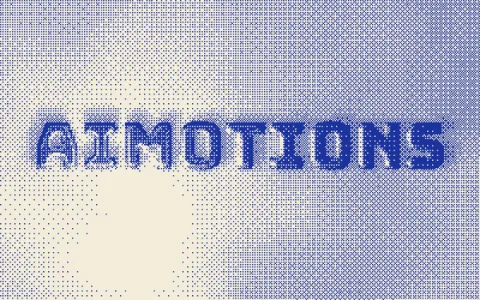
bayer dithering · ordered dither · 1-bit graphics · dithered gradient
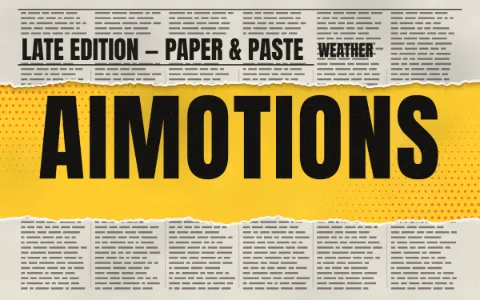
torn paper effect · ripped paper reveal · paper tear transition · ripped poster
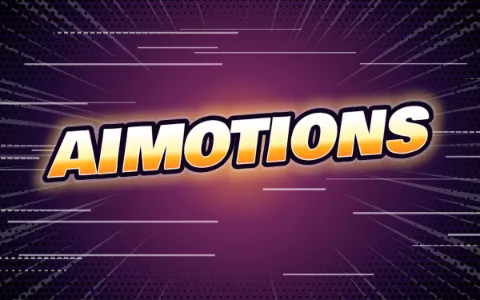
anime impact frame · speed lines · manga focus lines · anime title smash
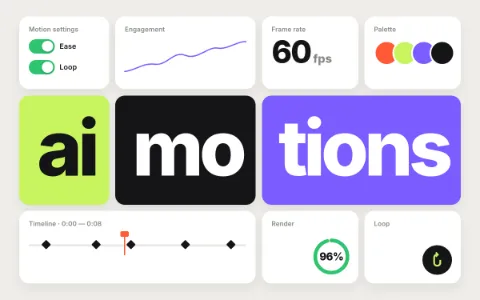
bento grid · bento box layout · feature grid animation · card grid reveal
No paywall, no sign-up. If a prompt saved you an hour, a coffee keeps new styles coming.
A written description of an animation (composition, typography, palette, texture, motion and timing) precise enough for an AI model or a person to recreate it. On aimotions every prompt uses [TEXT] as a placeholder for your own word.
For animations built in code, a frontier model with strong coding skills: Claude Opus 5.5, Claude Sonnet 5.5, Claude Fable 5.5, GPT-6 Astra or GPT-6.1 Sol, or newer versions. For complex shader or physics styles, ask the model to iterate and review its result.
Yes. Frontier models generate complete text animations in HTML, CSS, SVG, Canvas or WebGL from a good description. The prompt is the key: the more concrete it is, the more faithful the result.
They are a good starting point, because they describe the look and motion without depending on a tool. Still, models that write code reproduce typography far more faithfully than video generators do.
Current models understand English and many other languages well. Every aimotions style is also available with a Spanish prompt.
Yes. The prompts are free to copy, adapt and use in personal and commercial projects, with no credit required. Republishing the collection or a substantial part of it (for example as another library or a dataset) requires written permission.
aimotions has no paywall and no sign-up. It is funded by people who found a style they love. A coffee on Ko-fi helps pay for hosting and the next batch of styles.